
Intune Driver Update Management — Quick Start
Configure Intune driver-update policies, approval choices and deployment rings. Test the rollout and monitor device results before expanding assignments.
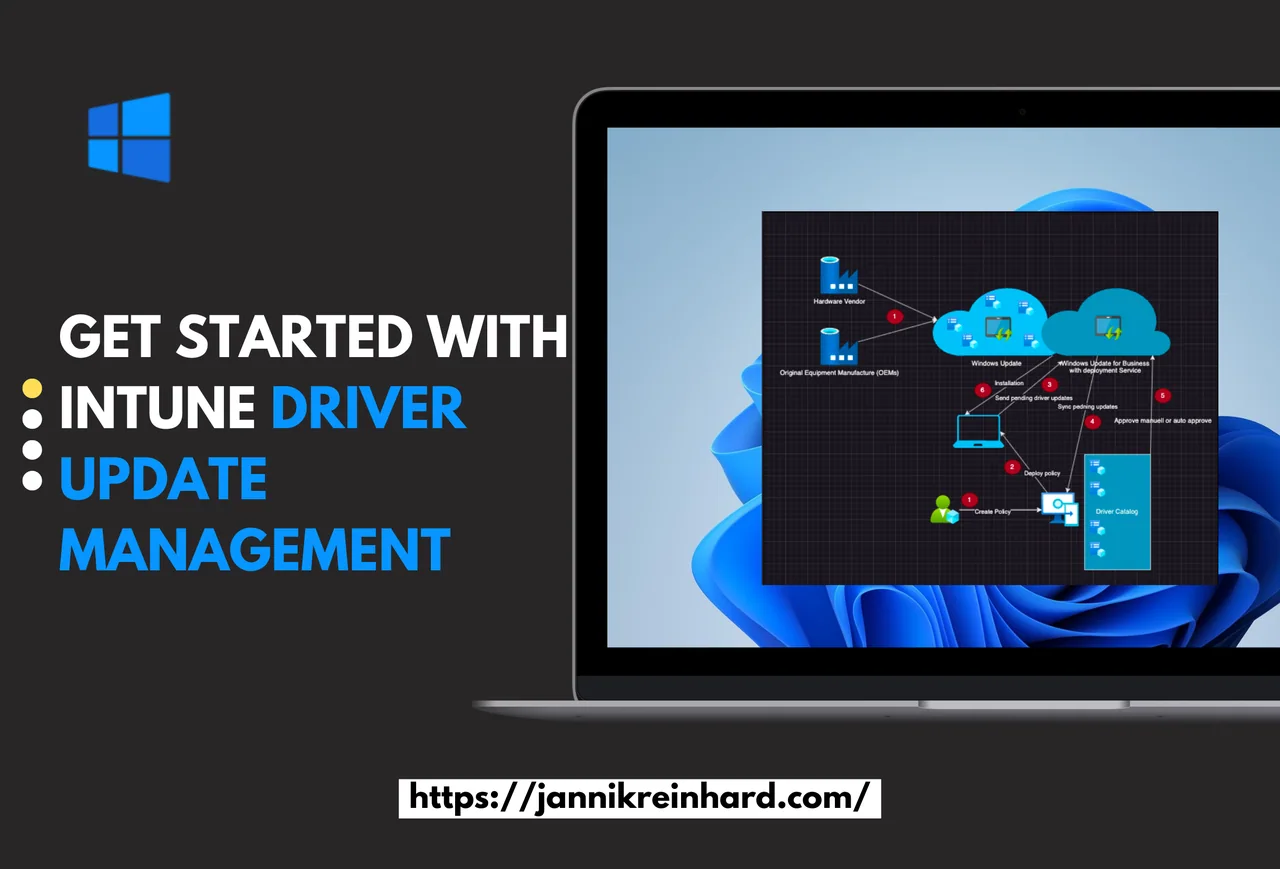
This is a quick start guide to Intune driver update management — the policy class that finally gives endpoint admins a controllable, transparent way to roll driver updates across a fleet of Windows devices. From profile creation to ring-based deployment, in under 30 minutes.
Many Intune admins have been waiting for the Intune driver update management feature. Now it is here. In this blog post I want to describe what’s behind this feature, how it works, and how you can get started with it.
What is Intune driver update management?
Intune driver update management is a new feature which was added on June 26, 2023 to Intune.
It is all about controlling, updating, and maintaining Windows drivers via Intune. With this feature the administrator can decide when or if a specific driver should be installed on the devices in the field to avoid compatibility or other issues. You can see a list of new drivers that apply to your devices in the field.
What are the prerequisites?
There are different prerequisites to activate / use the Intune driver management:
License:
- The tenant requires the Microsoft Intune Plan 1 subscription
- Microsoft Entra ID Free (or greater) subscription
- You need a Windows Enterprise E3/E5/F3**, Education A3/A5**, Virtual Desktop Access E3 or E5 or M365 Business Premium license
Device:
- Windows 10/11 Pro, Enterprise, Education or Pro for Workstations
- Enrolled in Intune
- Hybrid AD joined or Microsoft Entra ID joined
- Microsoft Account Sign-In Assistant (wlidsvc) must be able to run.
Configuration:
- You need a telemetry level of minimum required
- Not disable driver updates in the update settings
Network:
- Access to the Intune endpoints. You can test this with the following script
How Intune driver update management works
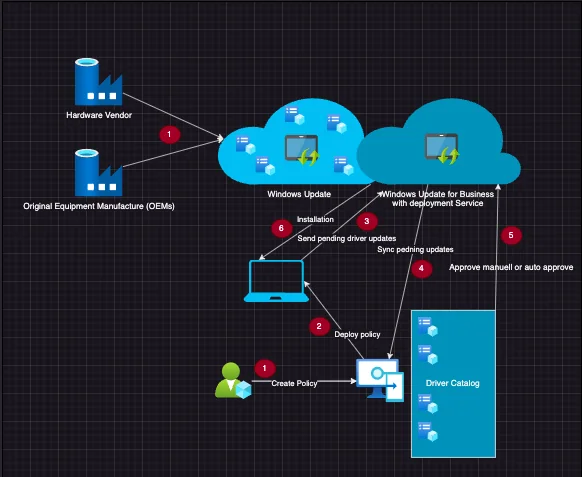
Intune driver update management is a feature on top of WUFB. It syncs the detected driver updates into Intune to show the administrator which updates are pending. The administrator can decide during the creation of the configuration which strategy he wants to follow:
- Automatic installation with the option to delay the installation for a defined number of days and the possibility to pause updates
- Manual installation where the administrator has to approve pending updates
The devices check in daily and report the pending updates to the Windows Update for Business Services (WUfB). This data is then processed and synced to Intune to show it in the Intune admin center.
The workflow looks like this: Hardware vendors mark an update as necessary or recommended. WUfB-DS syncs this information with Intune, which then performs a check to see if the update applies to the devices in the field. If it does, the update gets approved automatically. The device will then install this update during its next Windows Update scan.
Old versions of updates are moved to the ‘Other drivers’ section once a newer version is available. Once all devices have the newer version installed, the older one is removed from Intune’s list.
Recommended design
A solid Intune driver update management design uses multiple policies to have a smooth and error-free rollout. A typical strategy looks like this:
- Create a pre pilot policy with automatic installation directly after the release to a small group of devices in the ideal case on Intune administrator devices. Test this update for some days.
- Create a pilot policy with some days (1-2) delay. This group should also test the update for some days.
- Create an additional policy with automatic installation on all devices with a delay from 1-2 days from the pilot group.
If an issue occurs with this driver you can pause this update for the other rings to avoid additional problems in the field. You can also create more rings and longer delays depending on your internal requirements and device count. For more endpoint management deep dives, browse the rest of my Intune blog.

How to set up the feature?
Setting up Intune driver update management only takes a few steps in the Intune admin center:
-
Open the Intune console
-
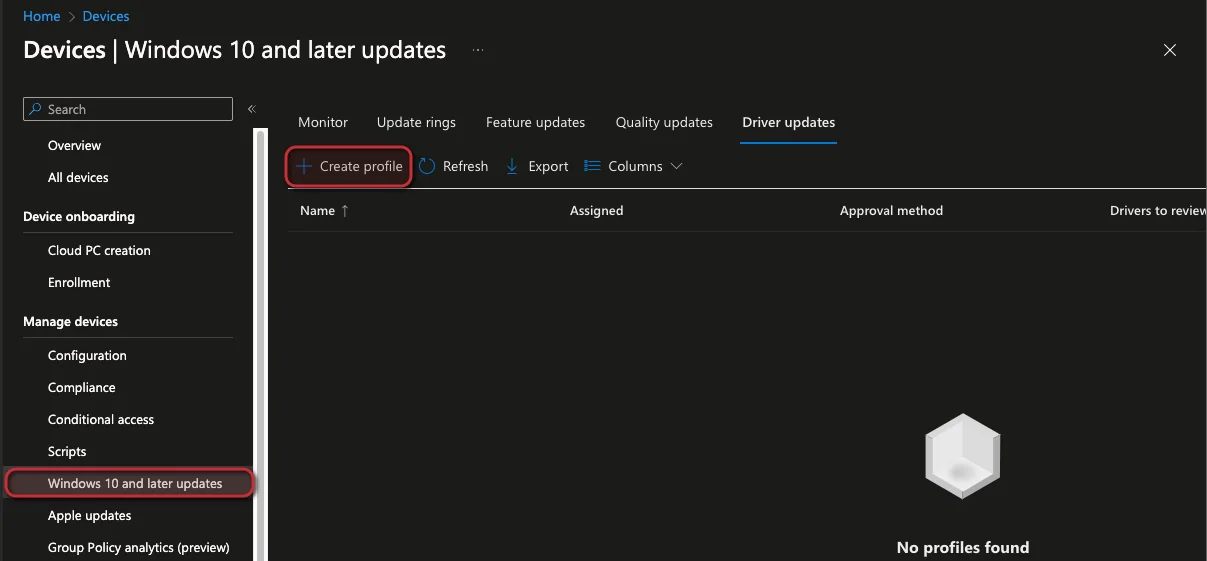
Navigate to Devices -> Windows 10 and later updates -> Driver updates -> +Create profile
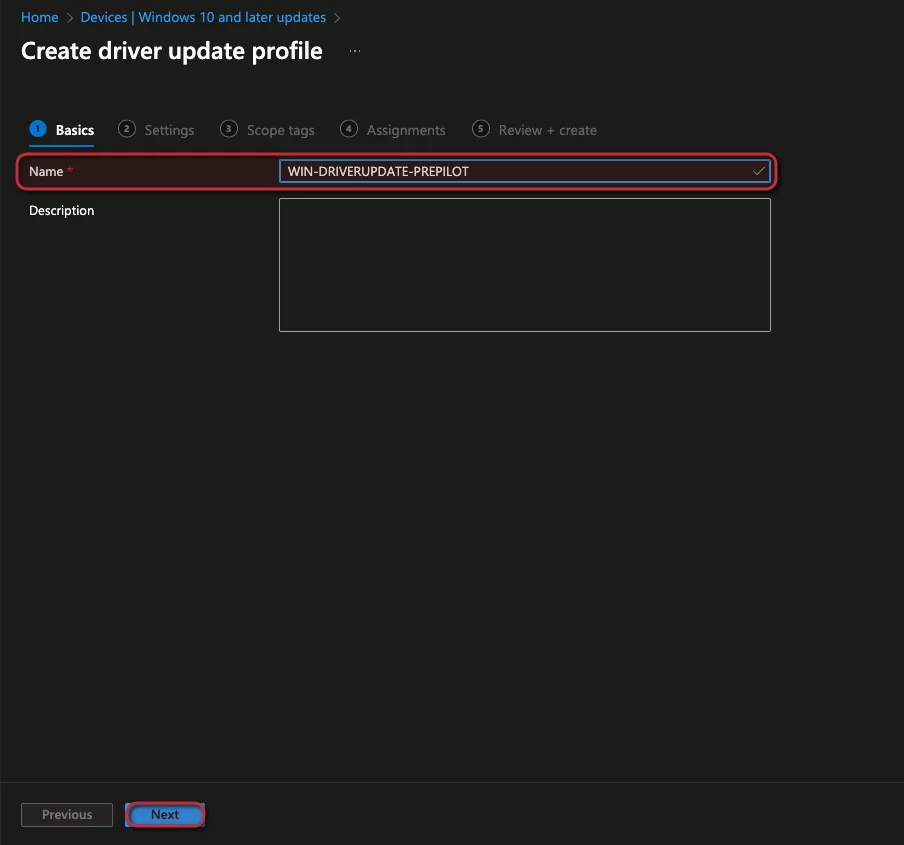
- Enter a Name and click Next
- Now you can select your Approval method.
- Manually (You have to approve the updates manually)
- Automatic (Automatic install with a delay and pause option)
- Select for automatic approval the delay in days
- Click Next
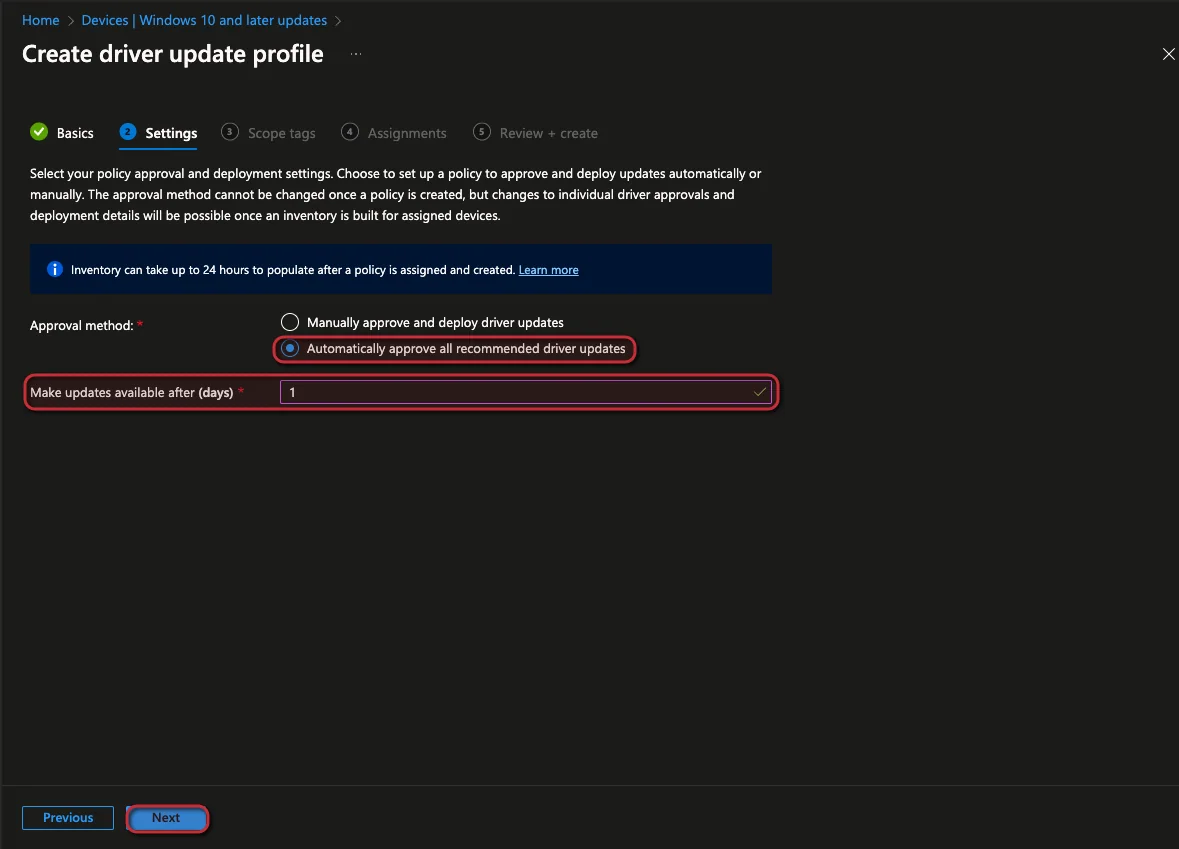
- Click Next ->Create an assignment in this case to a pre pilot group -> Click Next
- Click Create
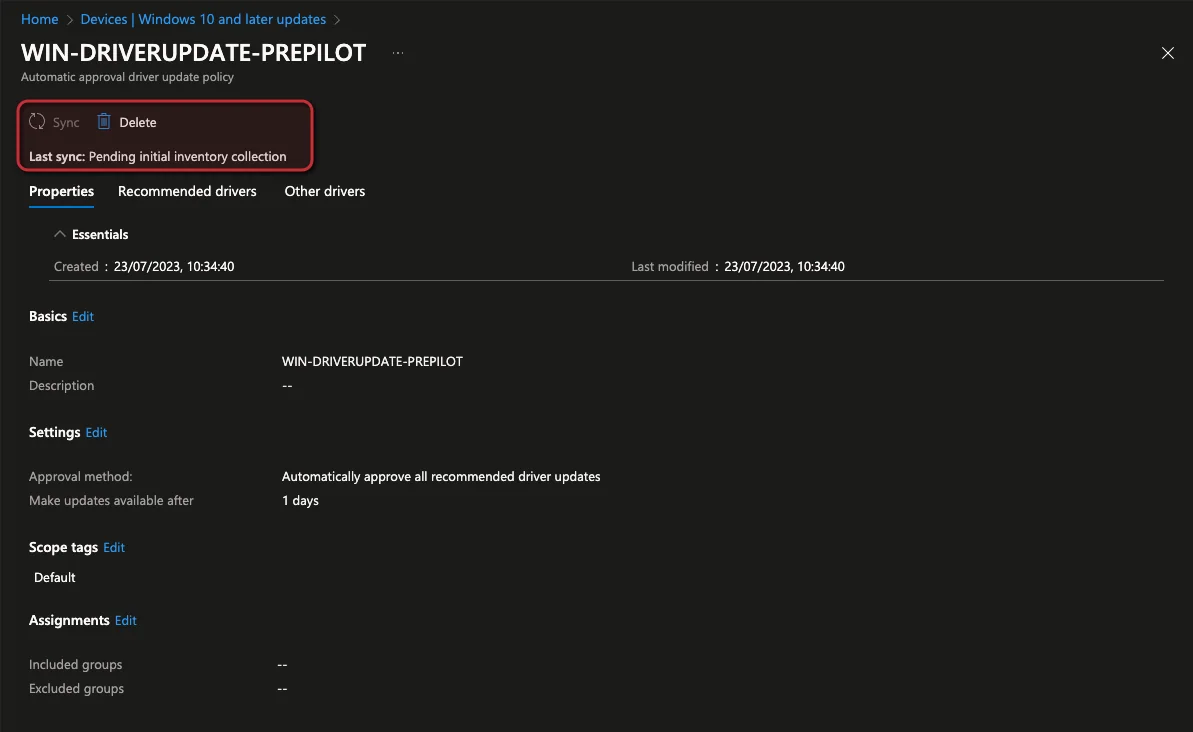
- Wait until the Sync from WufB is completed
- Go to the Recommended driver section and see the pending updates and how many devices are affected
Where can I find additional information?
To go deeper on Intune driver update management, the official Microsoft Learn documentation is the best starting point: