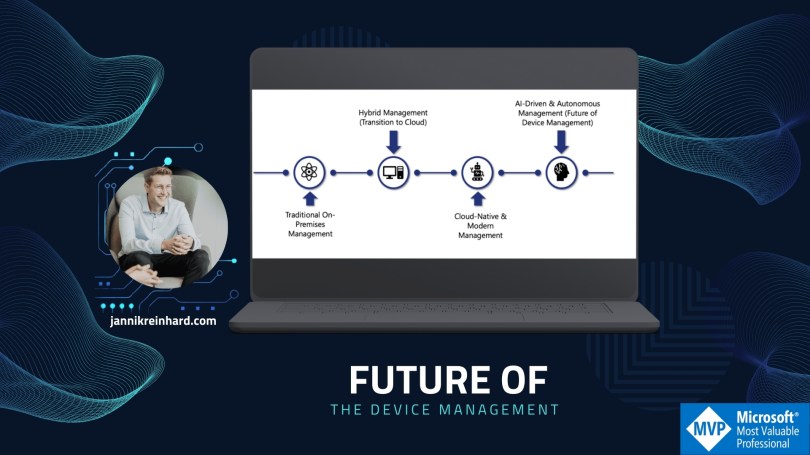
Let’s look in the future of device management

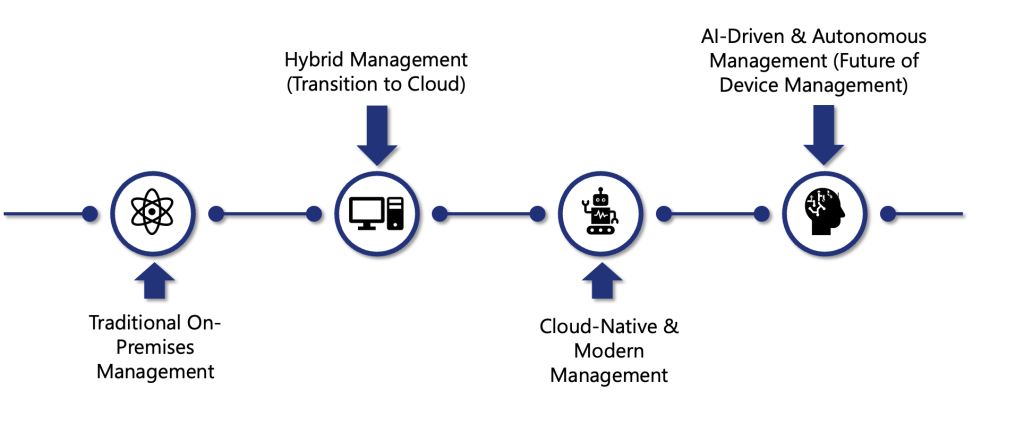
Endpoint management has come a long way from the days of manual, on-premises processes. In today’s world where employees work from home, on the road, or in branch offices—IT teams need tools that are not only powerful but also flexible and intelligent. Microsoft’s journey from Configuration Manager (SCCM) to Intune, and now toward AI-driven automation, shows how we can bridge legacy systems with cloud innovation to deliver seamless, secure, and proactive device management.
Read More »

Converting Device Groups to User Groups (and Vice Versa) Using Microsoft Graph API

I currently attend at the MMS Fort Lauderdale conference, where an attendee asked an good question: Is it possible to convert a device group into a user group, and vice versa? The answer is both yes and no. While there’s no out-of-the-box functionality in Intune to achieve this directly, it is possible by leveraging the Microsoft Graph API.

Read More »

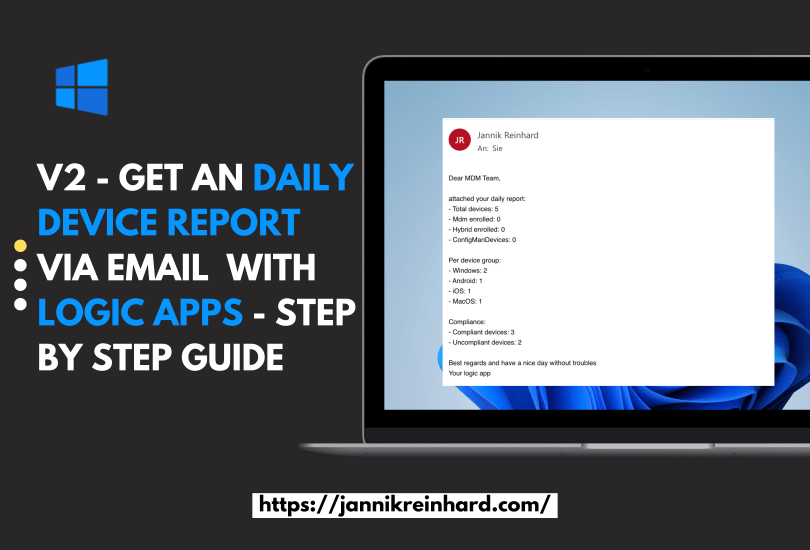
V2 – Get an daily device report via email or teams with logic apps – Step by Step guide

I have already written a blog about how to send a message using Logic apps to generate a regular device report. After a presentation about automation with Intune and Graph I got the good feedback if I can do a variant with Co Managed devices. So I decided to write a V2 of this blog and also update the authentication with Managed Identity. If you are interested in more blogs around the topic of logic apps, let me know and I will be happy to do a deep dive on logic apps.

Read More »

How to start with Azure Automation Runbook to automate tasks in Intune

As you all know I am a very very big fan of automation. The good thing is in almost all microsoft products there are interfaces to do exactly that. This is also the case for Intune. In one of my last blogs I wrote about how to use PowerShell to automate things in Intune. I also mentioned azure automation. In this blog I want to go deeper into the topic and explain how you can use azure automation to automate recurring processes.

Read More »

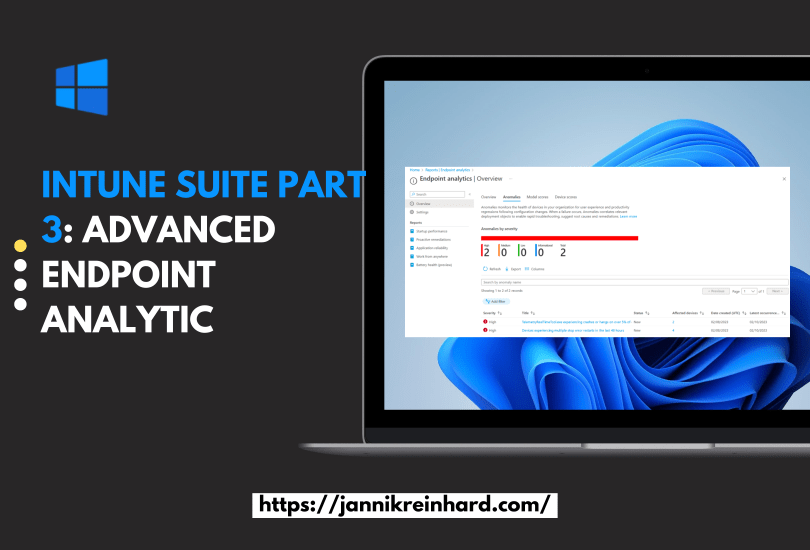
Intune Suite Part 3: Advanced Endpoint Analytics

In the third part of this Intune Suite series, I want to give you more insights into advanced endpoint analytics. I am really happy that Intune has gone in the direction of machine learning and anomaly detection. I blogged about these topics a few months ago, discussing how to analyze Intune data with the help of cognitive service anomaly detection. It’s awesome that Intune now includes this out-of-the-box in the tool. Unfortunately, I can’t test this feature in my own tenant because Endpoint analytics requires at least 10 devices, and this is not possible in my test tenant. However, I will cover all elements of the feature in this blog.

Source: https://learn.microsoft.com/en-us/mem/analytics/anomaly-detection

Read More »

Intune Suite Part 2: Easy start with Endpoint Privilege Management

In my second part of the Intune suite series I want to talk about Endpoint Privilege Management. This feature is brand new and was released yesterday. Endpoint Privilege Management (EPM) is a powerful feature in Microsoft Intune that allows you to enable users to run as standard users, without administrative rights, while still being able to complete tasks that require elevated privileges. This blog post will guide you through setting up Endpoint Privilege Management in your organization, ensuring users can remain productive without compromising on security.

Source: https://techcommunity.microsoft.com/t5/microsoft-intune-blog/enable-windows-standard-users-with-endpoint-privilege-management/ba-p/3755710

Read More »

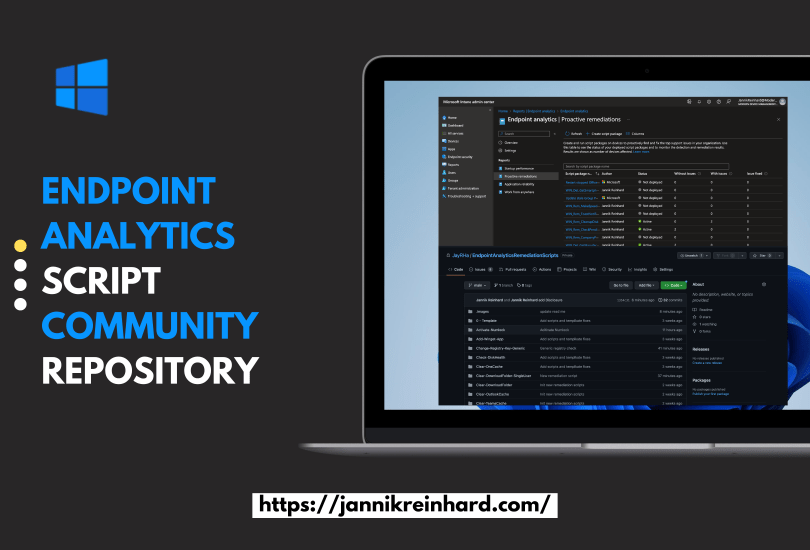
Endpoint analytics remediation script community repository

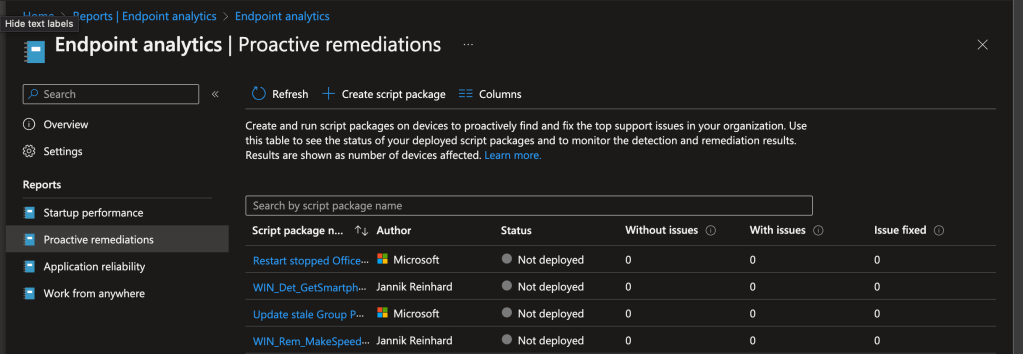
What could be better than working on a project together with others. Andrew Taylor, Joey Verlinden, Florian Salzmann and I have created a community proactive remediation script repository where we have written and added as many scripts as possible ready to use scripts for you. In this blog post I want to give you more insights in endpoint analytics proactive remediation scripts and explain how you can integrate these scripts into you environment.

Read More »