
How to build your custom GPT apps
Custom GPT apps made simple: learn to build powerful AI chat tools with Streamlit and Chainlit in this practical, step-by-step Azure OpenAI guide.
I wrote a lot of blogs about AI solutions, utilizing e.g. Azure OpenAI. But I want to take you on a journey of how you can build your own custom GPT apps and websites. In this post I will show you how to build your customized solution with the help of two very powerful frameworks. One is Streamlit and one is Chainlit. Both make it surprisingly fast to ship custom GPT apps without a huge engineering effort.
Both provide an interface for a Chat experience, but both have a different design (technical and visual). Choosing the right one is the first decision you make when you plan custom GPT apps.
What are the differences between these custom GPT apps frameworks?
Streamlit is more optimized to build very easy webpages without taking care about HTML and other design languages. You can build the whole webpage with Python. Streamlit not only provides a chat experience it also provides an experience for building standard webpages. It interprets the code always from top to bottom. This is something you have to consider when you write the code. Whenever an event is triggered, like a button click or text input, the whole code runs. For lightweight custom GPT apps this top-to-bottom model is easy to reason about.
Chainlit only provides a chat experience but in my point of view a more professional one. It also separates the front and backend. You can use Chainlit and build on top your custom frontend. The backend provides an easy integration with the most famous LLM (Large Language Model) frameworks, which makes it a strong base for production-grade custom GPT apps.
How to start to build an app in Streamlit?
The first thing you have to do is make sure that Python and Streamlit are installed on your device. Streamlit can be easily installed via pip install streamlit. When this is done you can launch the minimal app. To do this you can create a file named app.py and then insert only two lines of code:
import streamlit as st
st.title("Name of your app")
Now you can run the app with python -m streamlit run app.py
But our goal is to build intelligent custom GPT apps. For this we also need the OpenAI package and some more code. To install openai run pip install openai
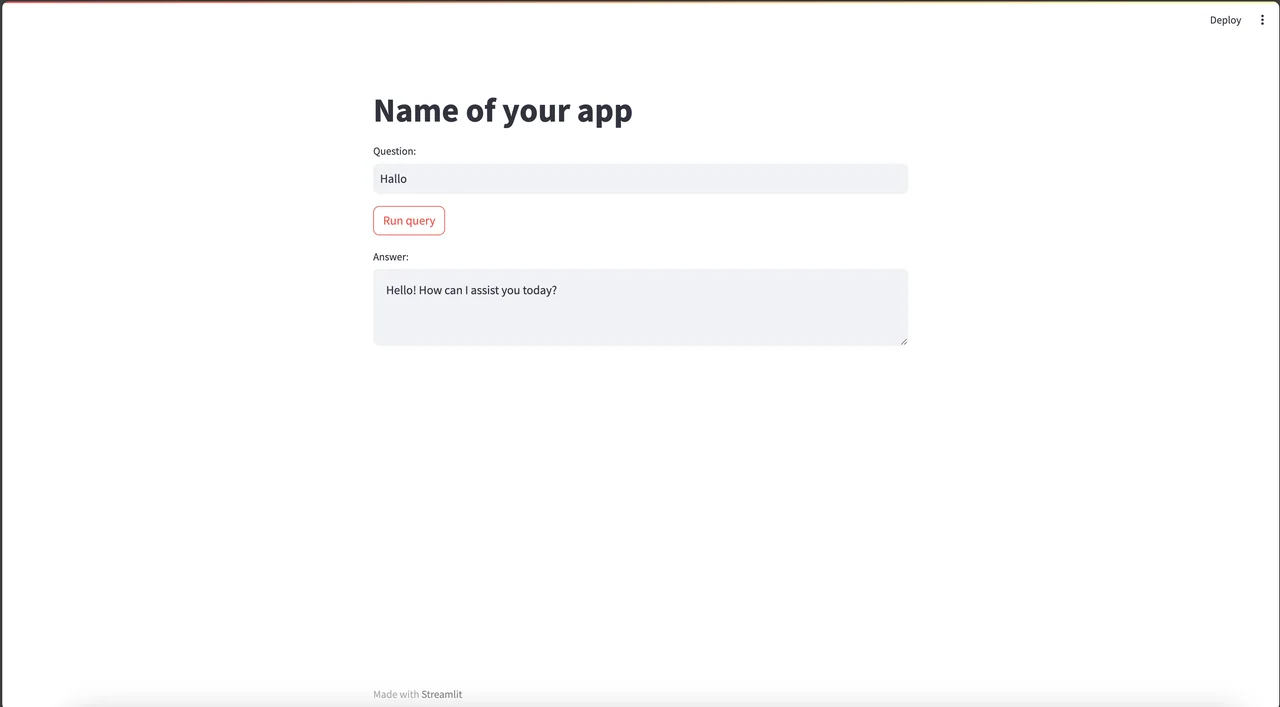
When you have this package installed, it is also important that you have access to an OpenAI instance. My recommendation is to choose Azure OpenAI. As mentioned above, you can check out my previous post where I explain how to deploy this service. If you want to dive deeper into the model APIs, the official Azure OpenAI documentation on Microsoft Learn is a great reference. Once this is done and all the requirements are set, you are good to go to implement an AI-powered app. Here you can find some example code for a default web page:
import os
import streamlit as st
from openai import AzureOpenAI

st.title("Name of your app")

if "input" not in st.session_state:
    st.session_state.input = ''

deployment_name='REPLACE_WITH_YOUR_DEPLOYMENT_NAME'
client = AzureOpenAI(
    api_key=os.getenv("AZURE_OPENAI_API_KEY"),
    api_version="2024-02-01",
    azure_endpoint = os.getenv("AZURE_OPENAI_ENDPOINT")
    )

input = st.text_input('Question:', value=st.session_state.input, key='input')

if st.button('Run query'):
    response = client.chat.completions.create(model=deployment_name, messages=[
            {
                "content": "You are a helpful bot",
                "role": "system"
            },
            {
                "content": st.session_state.input,
                "role": "user"
            }
        ]
, max_tokens=1000)
    st.text_area(label="Answer:", value=response.choices[0].message.content)
You can also check out my repository where I wrote a remediation creation app: JayRHa/Remediation-Creator (github.com). For more background on my AI work, see my blog overview on jannikreinhard.com.
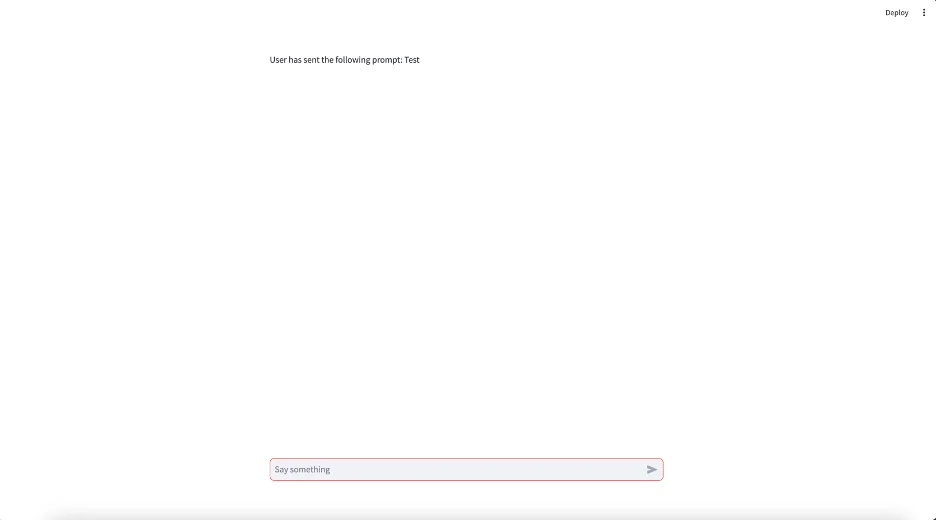
To build a chat experience you can use the following code:
import streamlit as st
prompt = st.chat_input("Say something")
if prompt:
    st.write(f"User has sent the following prompt: {prompt}")
Also, here you can integrate the OpenAI module to forward the prompt to the service.
How to start custom GPT apps in Chainlit?
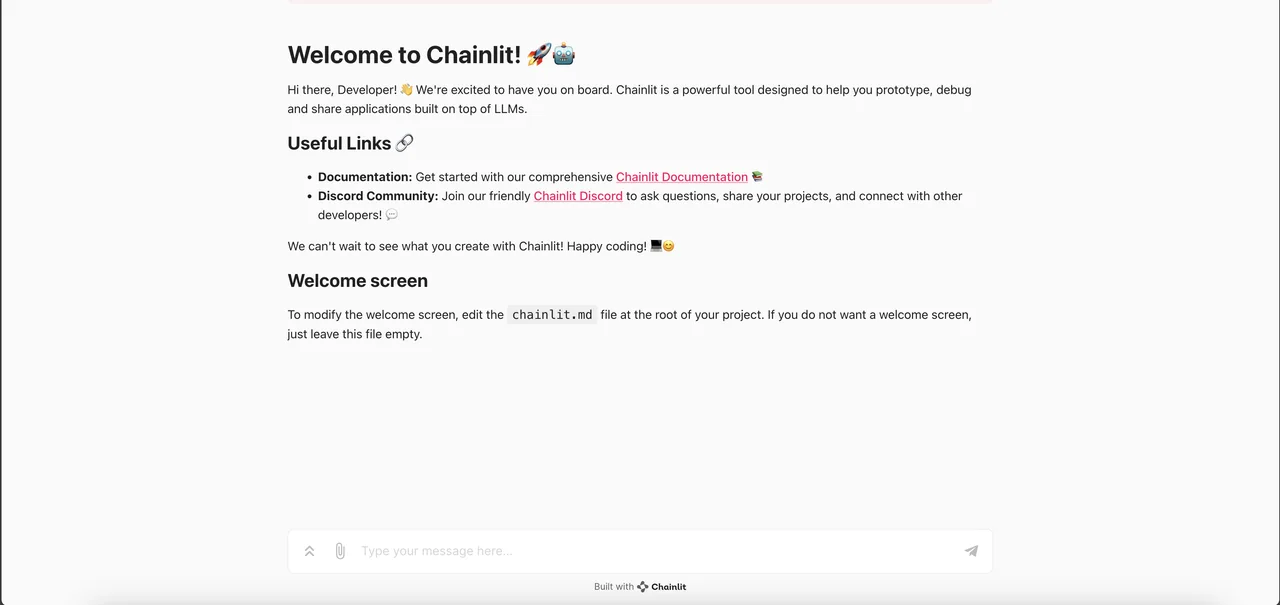
The procedure is very similar to Streamlit. You also need Python and the Chainlit package. You can install this via pip install chainlit. A minimal app in chainlit looks like this:
import chainlit as cl
@cl.on_message
async def main(message: cl.Message):
    await cl.Message(content="This is a test message answer").send()
Also, here we want to have more intelligence. Let us also build a chatbot here which forwards your chat to Azure OpenAI to generate answers for your questions. Here Chainlit also has a built-in OpenAI handler with cl.instrument_openai.
import os
from openai import AsyncAzureOpenAI
import chainlit as cl

client = AsyncAzureOpenAI(
    api_key=os.getenv("AZURE_OPENAI_API_KEY"),
    api_version="2024-02-01",
    azure_endpoint = os.getenv("AZURE_OPENAI_ENDPOINT")
    )

cl.instrument_openai()
settings = {
    "model": "gpt-3.5-turbo",
    "temperature": 0,
    # ... more settings
}

@cl.on_message
async def on_message(message: cl.Message):
    response = await client.chat.completions.create(
        messages=[
            {
                "content": "You are a helpful bot, you always reply in Spanish",
                "role": "system"
            },
            {
                "content": input,
                "role": "user"
            }
        ],
        **settings
    )
    await cl.Message(content=response.choices[0].message.content).send()
With these two frameworks you now have everything you need to ship your own custom GPT apps, from a quick Streamlit prototype to a polished Chainlit experience. Pick the one that fits your project and start building today.
New posts, straight to your inbox.
Hands-on guides on Intune, AI and Azure.