
Microsoft Foundry: free eBook
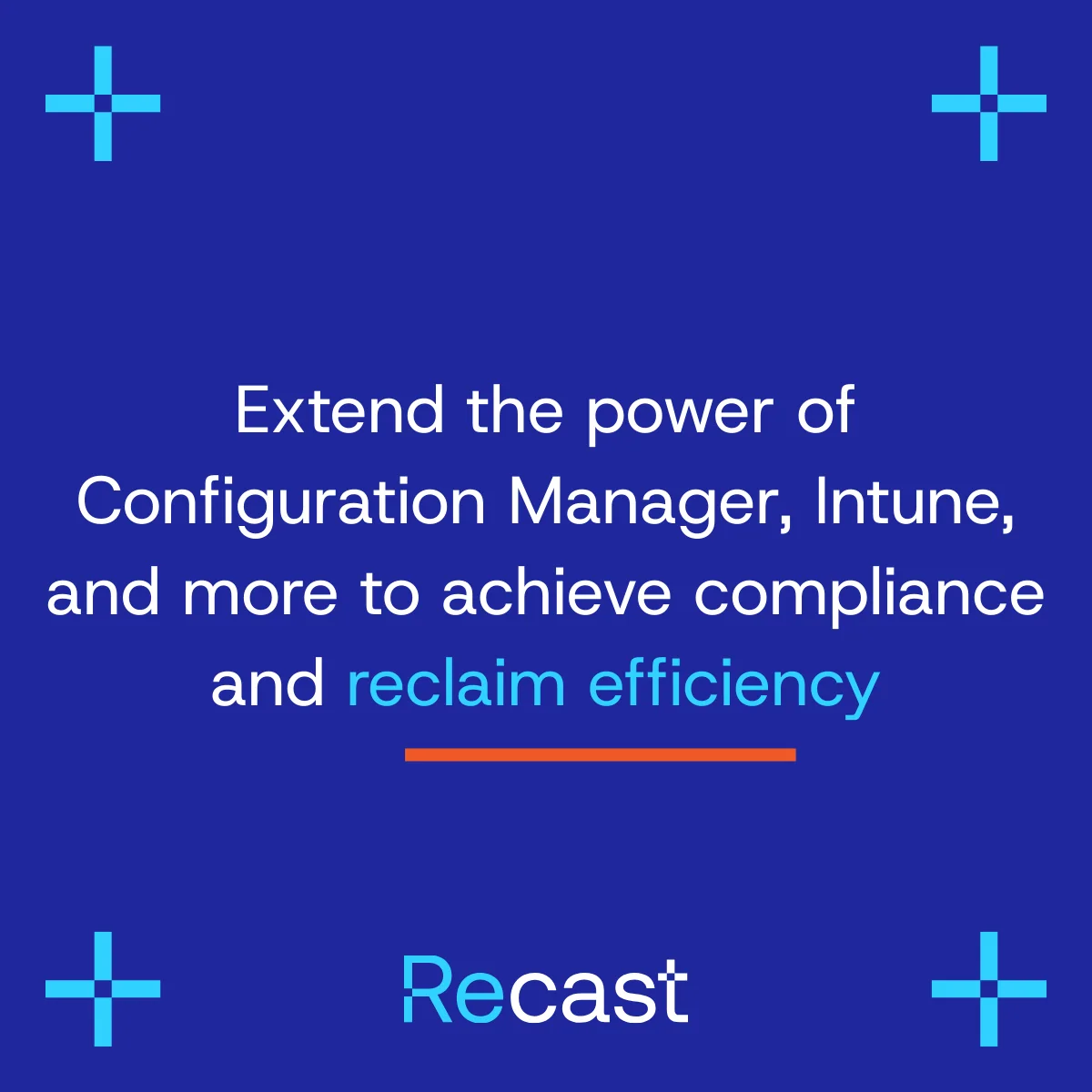
Microsoft Foundry covers the path from model deployment to enterprise AI agents. The book brings together retrieval-augmented generation, tools, multi-agent workflows, identity, evaluation and governance.
3 complete books · English PDFs · Free
Supported byAdvertisement

What this book covers
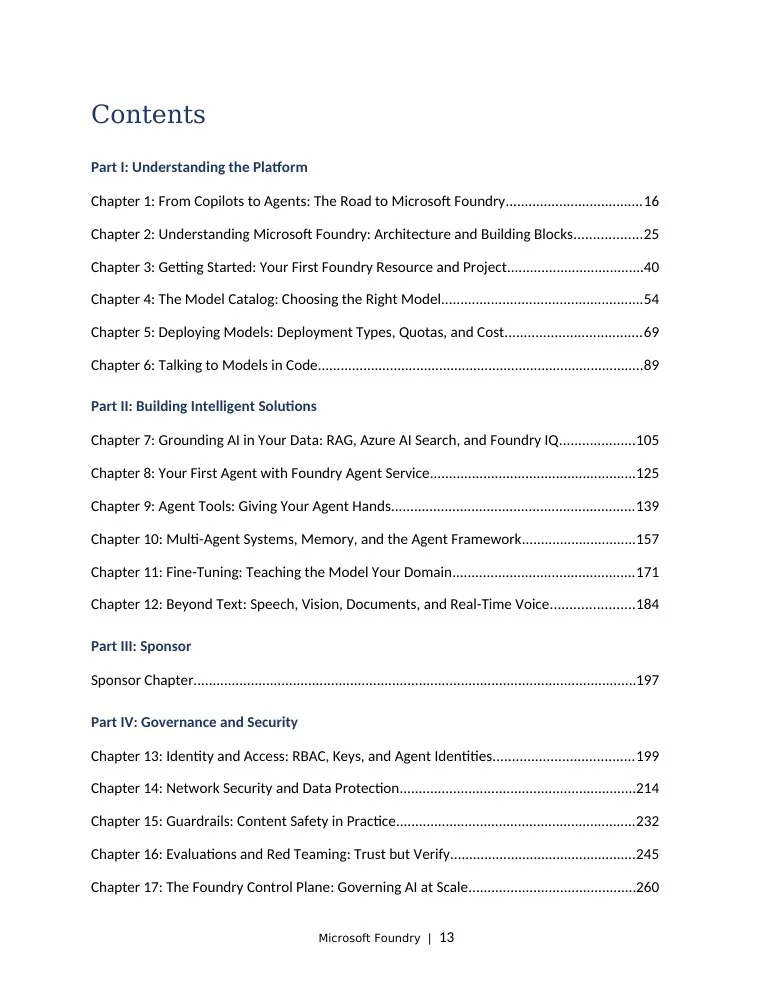
Preview the chapters and example pages from Microsoft Foundry below. The signup form explains how to receive the complete English edition.
380 pagesTopics and examples
Understand the platform behind enterprise AI agents.
- Models, deployment & agents
- RAG, Tools & Multi-Agent
- Identity, Governance & Evaluation
From a first resource to an agent
The book starts with the Foundry platform and a first Azure resource. It then follows model selection and deployment, calls from code, and the use of your own data. Later chapters connect agents to tools and cover workflows with several agents. Fine-tuning is treated as a separate step rather than a prerequisite for every solution.
Planning operation and governance
The later sections cover identity, networking, guardrails, evaluation, costs and ownership. Portal paths and code examples accompany the explanations. This makes the book relevant to developers building an agent and to architects or administrators planning its operation. Basic Azure experience helps; the opening chapters introduce the platform before the more detailed implementation topics.
The complete English edition, including all chapters and code examples.
See sample pages
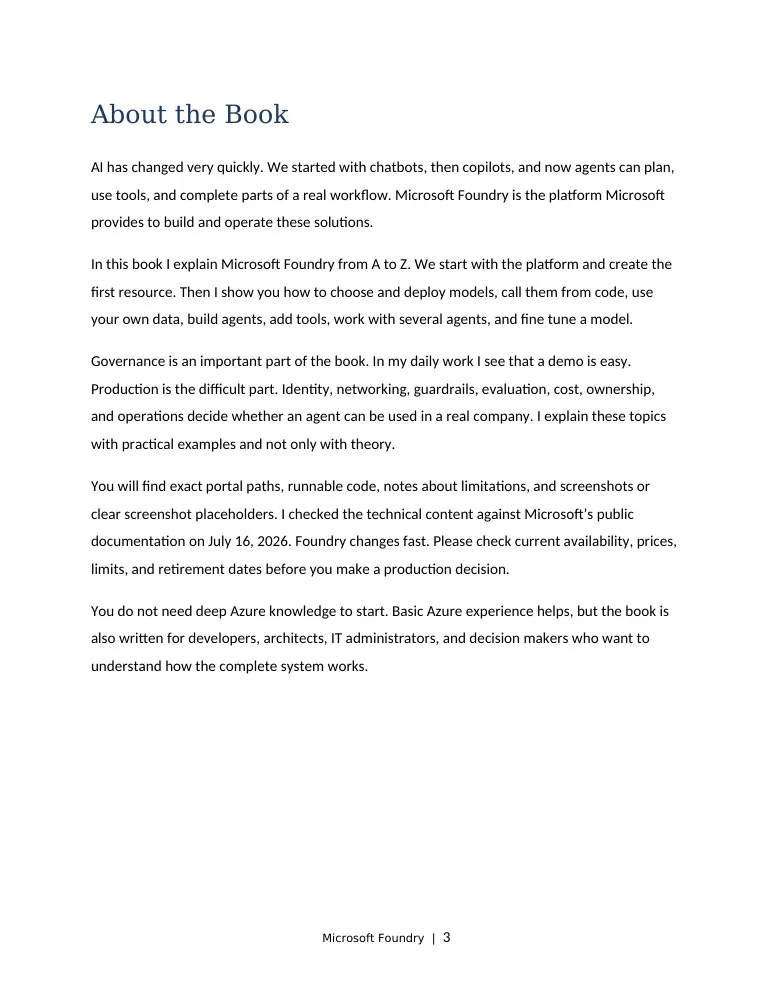
Work through an agent from input to evaluation
Begin with a task that has a result you can inspect. Write down who will use the agent, what information it needs and what it may change. Use the opening platform and deployment chapters to build the smallest version of that task. Keep a direct model call as a reference before adding retrieval or tools; this makes it easier to identify which addition changed an answer.
As you reach the chapters on your own data, prepare a small set of documents and questions whose answers you already know. Keep the expected source next to each question. Then work through the tool examples with a separate test environment. Check the requested permissions and record which actions require a person to review them. A successful demonstration is only one observation; repeat the exercise with missing information and inputs outside the intended scope.
Use the evaluation and governance sections to turn those observations into a review you can repeat. Compare the answers, cited information, failed calls and expected behavior. Note the model and configuration used for each run. Before extending the example to more users, work through identity, networking, costs and ownership with the people who will operate it. The companion repository provides code to read alongside the chapters; choose the example that supports your next question instead of copying an entire architecture at once.